
For architects and high-end builders, a finish is never merely a color applied to a frame. It is part of the building’s architectural language, a protective envelope against demanding environmental conditions, and a long-term commitment to performance, maintenance, and material responsibility.
That commitment is becoming more complex as the industry evaluates the future of PFAS: per- and polyfluoroalkyl substances: in architectural coatings. For decades, fluoropolymer systems such as PVDF and FEVE have been trusted for their exceptional resistance to ultraviolet exposure, weathering, chalking, and color fade. Today, however, regulatory momentum and evolving material priorities are encouraging the development of PFAS-free alternatives for aluminum and steel windows, doors, curtain walls, and related components.
The objective is not simply to remove a chemistry. It is to preserve the extraordinary visual depth and long-term durability expected in luxury architecture while creating specifications that are more adaptable to the regulatory landscape ahead.
Why PFAS-Free Finishes Matter in 2026
PFAS are a broad family of substances valued for properties such as chemical resistance, low surface friction, water repellency, and durability. Certain fluoropolymers used in architectural coatings have historically offered an impressive combination of weatherability and finish stability. Their performance has made them a familiar choice for premium façades and fenestration.
The concern is persistence. Many PFAS do not readily break down in the environment, which has led regulators in North America and Europe to examine their manufacture, use, and disposal across a wide range of industries.
In Europe, the universal PFAS restriction proposal under REACH includes fluoropolymers within its potential scope. As of 2026, the proposal is still moving through the scientific and legislative process; it is not yet a final, universally applicable ban. ECHA’s committee work is expected to continue through the end of 2026, with a potential European Commission decision in 2027 and transition periods that could extend into 2028 or 2029 for uses without longer derogations. The European Parliament’s 2026 briefing provides useful context for the evolving timeline.
For projects with long design, permitting, and construction schedules, this momentum matters now. A finish selected in 2026 may remain in service well into the 2040s. Specifying a documented PFAS-free alternative can reduce future compliance uncertainty, simplify material transparency reviews, and support the environmental objectives increasingly embedded in luxury residential development.
The Historical Role of PVDF and Fluoropolymer Coatings
PVDF coatings became prominent in architectural applications because they offered a dependable answer to several difficult performance requirements:
- Strong resistance to ultraviolet degradation
- High color and gloss retention
- Improved resistance to chalking and erosion
- Durable performance in harsh sunlight, humidity, and coastal conditions
- Broad color availability, including sophisticated metallic and mica effects
- Consistent application on aluminum panels, extrusions, and other architectural components
FEVE systems expanded the palette further, particularly where architects wanted deeper gloss, richer color expression, or more specialized liquid-applied finishes. Together, these technologies established the benchmark against which many alternatives are measured.
Their historical success should not be dismissed. A high-quality fluoropolymer coating can still be an appropriate choice where permitted, technically justified, and supported by clear environmental documentation. However, “red-list compliant,” “PFOA-free,” or “low-fluorine” should not automatically be interpreted as “PFAS-free.” The specification must define the required chemistry and documentation with precision.
For many forward-looking projects, the more resilient approach is to evaluate whether the desired performance can be achieved without intentionally added PFAS.
What the 2026 FGIA/AAMA Updates Mean for Specifiers
The 2026 editions of AAMA 2603-26, AAMA 2604-26, and AAMA 2605-26 continue to organize architectural aluminum coatings into familiar performance tiers:
- AAMA 2603: Basic performance, often suitable for interior or less demanding exterior applications
- AAMA 2604: High performance, appropriate for many exterior windows, doors, and architectural components
- AAMA 2605: Superior performance, traditionally selected for demanding façades and long-term exposure
The important point is that these are performance standards: not declarations of a particular resin chemistry. They evaluate characteristics such as color retention, gloss retention, chalking, film integrity, corrosion resistance, and weathering. A standard does not inherently require PVDF, nor does it automatically certify a polyester system as PFAS-free.
The 2026 refresh adds explicit coil-coating appendices and expands guidance concerning pretreatment and conversion coatings. These changes are particularly relevant to specification coordination. Coil-coated panels, post-fabricated aluminum extrusions, and factory-finished window and door components may follow different application processes, and the specification should identify the correct test framework.
Pretreatment deserves equal attention. A visually impressive finish can still fail prematurely if the substrate preparation, conversion coating, film thickness, curing profile, or fabrication handling is inadequate. For luxury fenestration, we recommend evaluating the complete finish system: not simply the topcoat.
The Most Promising PFAS-Free Alternatives
Super-Durable and Hyper-Durable Polyester
Advanced polyester coatings have become one of the most practical alternatives to fluoropolymer systems. Super-durable polyester formulations use improved resin chemistry, high-performance pigments, and carefully controlled additives to provide substantially better exterior weathering than conventional polyester.
For many residential applications, a properly qualified super-durable polyester can provide:
- Strong resistance to ultraviolet exposure
- Excellent color and gloss retention
- Durable protection against moisture and general weathering
- A broad range of solid, textured, metallic, and mineral-inspired finishes
- Lower-VOC application options compared with some liquid fluoropolymer systems
The key is qualification. The phrase “super-durable polyester” is not, by itself, a performance guarantee. Architects should request documentation demonstrating the applicable AAMA 2604-26 or QUALICOAT classification, along with a supplier declaration confirming the absence of intentionally added PFAS in resins, additives, pigments, and pretreatments.
Hyper-durable polyester systems are also emerging for projects that require performance approaching the highest architectural coating tiers. However, a PFAS-free polyester system should not be represented as automatically equivalent to every AAMA 2605 fluoropolymer application. For demanding coastal, desert, or high-solar exposures, project-specific testing and written warranty conditions remain essential.
Powder Coating
Powder coating provides a particularly compelling route for aluminum windows and doors. The dry powder is electrostatically applied and heat-cured, creating a uniform film with strong resistance to chipping, scratching, fading, and everyday wear.
Copper River’s powder-coating program reflects the aesthetic flexibility of this approach, with a wide selection of colors, textures, and finishes for both contemporary and traditional architectural expressions.
The next generation of powder coatings is moving beyond the assumption that fluorinated additives are necessary for premium results. PFAS-free additives and wax technologies are being developed to support surface flow, texture, slip, and processing without relying on PTFE or fluorinated surfactants. Still, the entire formulation must be reviewed. A polyester resin may be non-fluorinated while a processing additive introduces PFAS into the finished system.
Anodizing
Anodizing is an electrochemical process rather than an organic coating, and it is inherently fluorine-free. It creates a durable oxide layer integrated with the aluminum surface, offering excellent hardness, abrasion resistance, and ultraviolet stability.
Anodized finishes are especially effective when the design calls for:
- Natural metallic expression
- Bronze, champagne, or dark architectural tones
- A refined, mineral-like surface
- Long-term resistance to abrasion and handling
- A finish that reveals the character of the aluminum rather than concealing it
Anodizing does have limitations. The available color range is generally narrower than that of powder or liquid coatings, and consistency can be influenced by alloy, extrusion batch, surface preparation, and production sequencing. For large curtain wall assemblies or multiple fabrication lots, finish approval should include representative samples under controlled lighting.
Qualicoat’s 26th Edition and the Importance of Full-System Performance
The QUALICOAT 26th Edition, valid from January 1, 2026, continues to distinguish architectural powder coating performance through durability classes, including Class 2 super-durable and Class 3 hyper-durable systems.
Class 2 is commonly associated with demanding exterior architectural applications, while Class 3 is intended for particularly high-exposure or long-service-life requirements. These classifications consider more than film thickness. Accelerated weathering, natural exposure, gloss retention, color change, corrosion resistance, and application quality all contribute to the result.
For specifiers, this is a valuable reminder: finish durability is a system attribute. It depends on the aluminum alloy, pretreatment, coating chemistry, film build, curing, fabrication, installation, drainage, sealants, and maintenance environment.
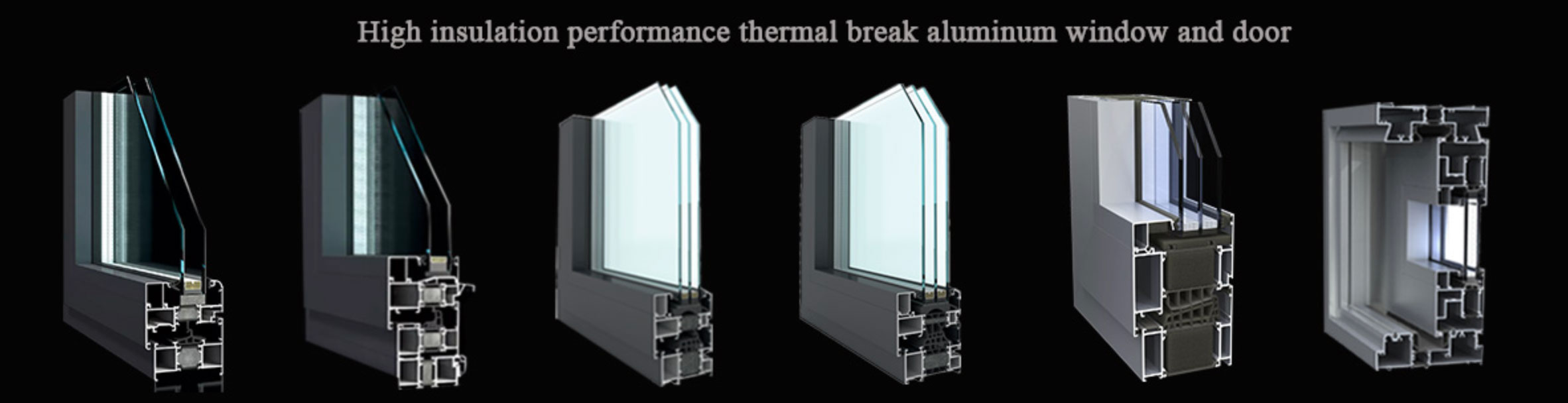
A premium finish should therefore be reviewed alongside the complete window, door, or curtain wall assembly. Copper River’s curtain wall systems are designed to coordinate performance, thermal design, weather protection, and architectural expression rather than treating the finish as an isolated decision.
Color Depth Without Compromising Design Intent
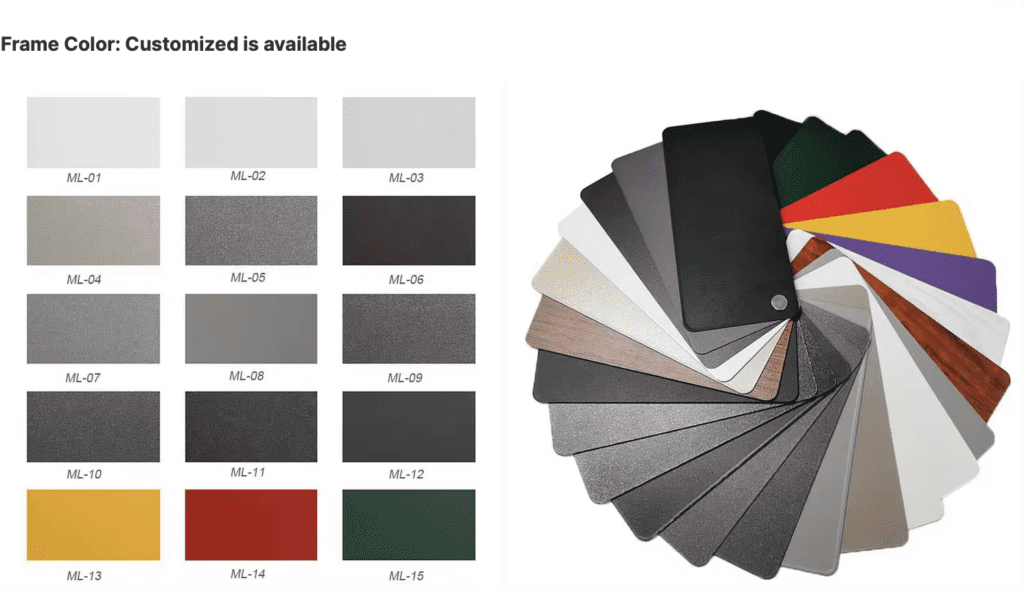
PFAS-free does not mean visually limited. Today’s advanced powder and polyester systems can support a sophisticated palette that includes:
- Deep architectural blacks and charcoal tones
- Warm bronze, copper, and champagne finishes
- Soft whites and restrained mineral neutrals
- Fine textures that reduce the appearance of handling marks
- Metallic and mica effects for greater visual movement
- Coordinated interior and exterior color schemes
For luxury homes, finish selection should be considered in relation to daylight, surrounding materials, glazing reflectance, stone, wood, and landscape. A dark textured frame may create a striking contrast against pale stone, while a warm anodized bronze can harmonize with natural timber and aged metalwork.
We encourage teams to review physical samples: not only digital renderings: under morning, midday, and evening light. The most successful finish is the one that maintains its intended character across the changing conditions of the architecture.
A Practical PFAS-Free Specification Framework
For a high-end project, the finish specification should address five elements:
-
Define PFAS-free clearly. Require no intentionally added PFAS, including PVDF, FEVE, PTFE, fluorinated surfactants, and side-chain fluorinated polymers, unless a project deliberately permits an exception.
-
Identify the performance tier. Reference the appropriate AAMA 2603-26, 2604-26, or 2605-26 level, or the applicable QUALICOAT class.
-
Require supplier documentation. Request written declarations covering the resin, pigments, additives, pretreatment, and curing process: not only the brand name of the finish.
-
Coordinate exposure conditions. Coastal salt, intense solar radiation, desert dust, high humidity, and urban pollutants can influence the appropriate finish system.
-
Review the warranty and maintenance requirements. Confirm that the warranty applies to the actual substrate, application method, color family, orientation, and environmental exposure.
Steel components require additional care because AAMA 2603–2605 are primarily architectural aluminum coating standards. Steel frames, fasteners, brackets, hinges, and concealed hardware should be evaluated through their own corrosion-protection and wear requirements, with PFAS-free topcoats or zinc-flake systems qualified for the intended use.
Specifying the Future with Confidence
The transition toward PFAS-free architectural finishes is not a reason to compromise on beauty, durability, or design ambition. It is an opportunity to approach material selection with greater precision.
At Copper River Windows and Doors, we see our role as more than supplying premium windows and doors. We collaborate with architects, builders, contractors, and homeowners to align finish chemistry, performance expectations, architectural intent, and installation realities. Whether the project calls for a richly textured powder coat, a meticulously matched anodized finish, a high-performance polyester system, or a carefully documented alternative for steel components, our goal is to help turn a visionary concept into a lasting result.
Explore our luxury window specifications, review our curtain wall systems, or contact our team to begin developing a finish strategy tailored to your next extraordinary project.